
Self Energy and the nervous system - how combining polyvagal theory enhances IFS
A Brief Introduction to IFS
So… what is Internal Family Systems?
There’s a lot of good information out there—YouTube has some excellent introductions, especially from Dick Schwartz (who developed the model) and Derek Scott. I keep an updated list of resources on my website: www.stroudtherapy.com.
At its heart, IFS offers a way of understanding ourselves that honours both our multiplicity and our wholeness. When combined with Polyvagal Theory, the two models work synergistically—helping us address trauma, regulate emotions, and create deeper mind–body awareness.
IFS starts with this simple idea: we are all made up of many parts—little personalities inside us who are trying to look after us, or who are younger selves carrying pain and longing for healing.
And then there’s you—the subject of this talk.
It is a fundamental of IFS that we each have a core Self, and the Self is never broken. One of the main aims of IFS is restoring you, the Self, to the centre of your internal system—what we call Self leadership.
The Qualities of Self
Self shows up through certain qualities, sometimes called the 8 Cs:
Calm, Clarity, Confidence, Courage, Creativity, Connection, Curiosity, Compassion.
Dick Schwartz enjoys alliteration, so there are also the 5 Ps: Patience, Persistence, Perseverance, Presence, and Playfulness.
Others have expanded the list further: qualities like flow, wisdom, open-heartedness.
And Sarah Bergenfield, writing about the autistic Self, highlights qualities such as regulation, ease, safety, aloneness, and contentment.
I imagine we each have our own unique balance of these qualities. Julia Sullivan (2010) described two ways of holding Self:
The here-and-now Self—you, at your current age, with all your capabilities and life experience, embodied in the present moment.
The timeless Self—the seat of consciousness, core spiritual Self, ageless and connected beyond you—what Dick Schwartz often points to when he talks about Self as a wider field connecting us all.
Self and Parts
What we aim for is a two-way relationship between Self and parts. Self becomes the driver of the bus, the chair of the meeting, the conductor of the orchestra. Or, as I sometimes say, the sun shining behind the clouds of our parts.
We don’t in IFS “chase” Self—it’s innate, always there. Our work is to unblend: asking parts to give us some space so Self can step forward.
Parts fall broadly into three groups:
Managers: proactive protectors who try to keep us safe and looking good. Examples: the inner critic, the sceptic, the planner, the analyser, the judge, the blamer, or the numbing manager who keeps feelings at bay.
Exiles: younger parts carrying burdens of pain or shame. They hold beliefs such as “I’m worthless,” “I’m a failure,” “I’m not enough,” or “I’m too much.”
Firefighters: reactive protectors who step in when exiles are triggered, to distract or soothe urgently. Examples: rage, fog, dissociation, over-scrolling, alcohol, drugs, self-harm, suicidal thoughts, or fantasy. They’re often misunderstood, but they’re trying to help.
All of these parts took on their roles to protect us—usually in childhood—after trauma, rejection, or helplessness. Their intentions are good, even when the effects are difficult.
The Point of IFS
So why do IFS? We can think of it in four steps:
Restoring Self leadership—re-establishing trust in Self at the centre of the system.
Forming secure internal attachment—building a loving, balanced relationship with parts so they no longer have to act in extreme roles.
Unburdening—healing the parts of us that carry pain, as well as releasing cultural, societal, and familial legacy burdens.
Expanding Self energy outward—bringing more Self into our relationships, our communities, and the wider world.
Practising IFS
We’ll try a simple practice together in a meditation shortly. There are also many recorded meditations available—on Insight Timer and elsewhere.
You can explore IFS by:
practising alone with resources (such as the 6 Fs protocol and parts questions available on my website),
joining the Stroud WhatsApp Buddy Up group to practise locally with someone else,
finding an IFS or IFS-informed therapist,
or connecting in IFS online communities, such as the Facebook practice groups.
IFS is best done in connection with others. We heal and thrive in relationship—we need co-regulation, mirroring, and to bathe in each other’s Self energy. A buddy, a therapist, or a safe group makes the work more grounded and sustainable.
A Short Invitation
So let’s pause.
Close your eyes, or soften them. Breathe a little slower and deeper. Turn your attention inward. Notice what shows up.
You might hear a part, see an image, feel a sensation.
Can you be curious? Can you find a little space to meet what arises?
Ask: Who does this part think I am? How do I feel towards it? What is it trying to do for me? What is it afraid of? How old is it? How old does it think I am?
If it feels right, you might even say: “I’m sorry I haven’t been around, but I’m here now. I’d like to be trustworthy, if you’ll give me the chance.”
This is the beginning of IFS: forming relationships inside—with protectors first, then, when it feels safe, with your younger parts too.
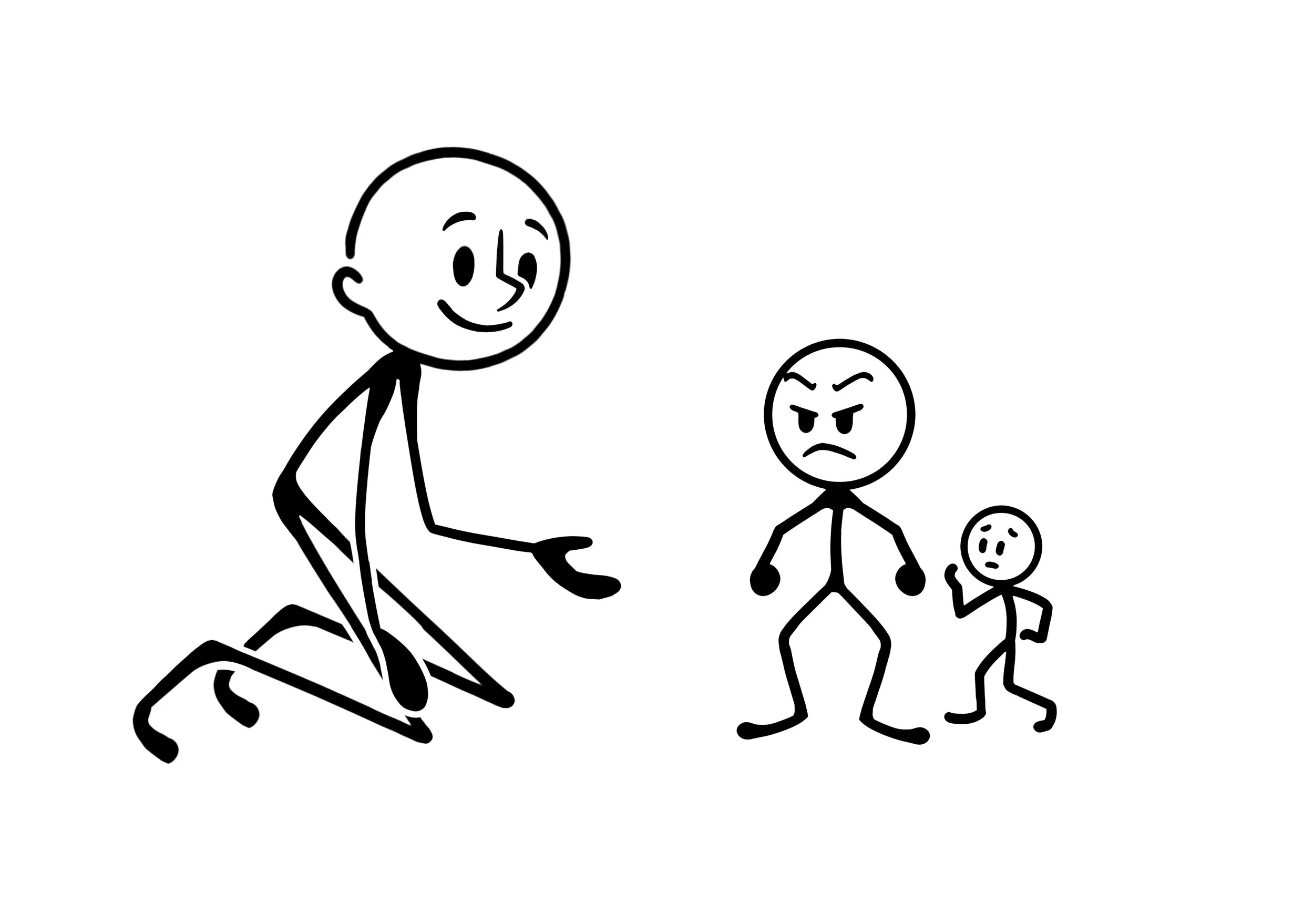
Polyval theory is a way of understanding the biology at work in ourselves and in our clients. Whether we know it or not, we cannot work with another human being without being in communication with their nervous system. Polyvagal Theory gives us a roadmap for tuning into those conversations and having explicit, nervous-system-to-nervous-system communication.
Polyvagal Theory is 'the science of safety' the science of feeling safe enough to fall in love with life and take the risks of living. Deb Dana
The integration of IFS and Polyvagal Theory is not a competition between frameworks. Many IFS practitioners who train in Polyvagal Theory find it a 'really lovely integration.' A common realisation is: 'Now I understand why, when I do this thing, it either works or doesn't work. Now I understand why a part came in.' When a part comes in to interrupt a process, it is telling us that the nervous system has just sensed a cue of danger — the part has come in to bring our attention to that.
The Three Pillars in Depth
1. Hierarchy — The Autonomic Ladder
Polyvagal Theory can be understood through three core principles: hierarchical organisation of autonomic circuits, neuroception, and co-regulation. These are not separate systems but complementary features of a single integrated process how autonomic regulation is structured, how it is guided, and how it is supported within social contexts.
Deb Dana introduced the Polyvagal Ladder as a metaphor to explain how the autonomic nervous system moves through different states in a specific order. A sudden loud noise might cause someone to drop from a calm, connected state to a fight-or-flight response not a conscious decision, but a sequential drop triggered by external cues. Understanding this sequential nature is profoundly normalising, helping to relieve self-judgement and blame.
Ventral Vagal — The Top Rung
At the top of the ladder we are in a state of safety, calm, and connection the most evolved state of the autonomic nervous system. We feel safe, grounded, and socially connected. Our social engagement system is active: we can connect with others, express ourselves, and listen openly. The 8 Cs of Self in IFS (calm, curious, creative, compassionate, connected, courageous, clear, confident) are largely ventral expressions.
Sympathetic — The Middle Rung
Mobilisation for survival — fight or flight. Executive function goes offline; breath becomes shallow; protectors in IFS terms come blazing forward. Active firefighters emerge — rage, impulsivity, high-risk behaviours. Critical and controlling managers also live here: catastrophising, perfectionism, hypervigilance, incessant planning.
Dorsal Vagal — The Bottom Rung
The most ancient pathway — collapse, shutdown, freeze-and-fold. Dissociation and depression are related to this autonomic, unconscious response. In IFS terms, the most burdened exiles often carry their pain in this state — shame, worthlessness, hopelessness, numbness.
Blended States
• Freeze: sympathetic + dorsal simultaneously — hyper-activated yet immobilised, often mistaken for calm.
• Fawn: a sympathetic + dorsal blend — appeasing, accommodating, shape-shifting to perceived danger. Common in relational trauma.
• Ventral + Sympathetic: enlivened, creative drive — mobilised but connected. Dancing, passionate advocacy, joyful exertion.
• Ventral + Dorsal: restorative rest — genuinely replenishing solitude or quiet togetherness. Distinguished from collapsed dorsal by the presence of ventral tone underneath.
2. Neuroception — The Subconscious Safety Radar
Neuroception is the nervous system's non-conscious, continuous assessment of safety and danger — happening beneath awareness, all the time. It responds to cues through three pathways:
• Inside the body — physical sensations and internal emotional states
• Outside in the environment — sounds, light, space, faces
• Between people — prosody, eye contact, touch, breath
Crucially for IFS practitioners: for clients with trauma histories, neuroception is often biased toward danger, leading to chronic protective activation. Protective parts orient themselves around these neuroceptive signals. What is often called 'resistance' in therapy can be better understood as intelligent protection. Protectors step forward when they sense danger — not to sabotage, but to keep the system safe.
When ventral vagal regulation is available, neuroception is more likely to detect safety. When defensive circuits dominate, neuroception becomes biased toward detecting threat — even in neutral environments. This is why working with the nervous system before diving into parts work can be so crucial, particularly with complex trauma.
3. Co-Regulation — A Biological Imperative
Co-regulation is the body's need to manage its biobehavioural state through engagement with others. Connectedness the ability to mutually and reciprocally regulate physiological and behavioural states — serves as the neurobiological bridge between social behaviour and overall mental and physical health.
'I've found that the most important variable in how quickly clients can access their Selves is the degree to which I'm Self-led. When I can be deeply present to my clients from the core of my being, clients respond as if the resonance of my Self were a tuning fork that awakens their own.' Richard Schwartz
The therapist's own regulated state is itself a clinical intervention. Their ventral vagal system communicates safety to the client's nervous system through tone of voice, micro-facial expressions, breathing, and posture — below the level of words. Self energy in the therapist literally becomes co-regulation for the client's parts.
Deb Dana's Key Concepts: Glimmers and Triggers
One of Dana's most influential contributions to everyday Polyvagal practice is the pairing of triggers and glimmers.
Triggers
Triggers are events that overwhelm the vagal brake and activate defensive states — either mobilising us into fight-or-flight, or pushing us into dorsal vagal shutdown. They bring a neuroception of danger or life-threat, and the autonomic nervous system activates a survival response. In IFS, this is the moment parts step in front of Self.
Glimmers
Glimmers are the lesser-known but equally important counterpart. Coined by Deb Dana, 'glimmers' describes small moments when our biology is in a place of connection or regulation, cueing our nervous system to feel safe or calm.
'We're not talking great, big, expansive experiences of joy or safety or connection. These are micro-moments that begin to shape our system in very gentle ways.' — Deb Dana
Glimmers are micro-moments of ventral vagal activation that can shift a nervous system from survival mode toward autonomic regulation. Focusing on them can gradually strengthen the safety state and the vagal brake.
In IFS terms, cultivating glimmers is closely related to the practice of finding resources — felt memories of safety and connection that protectors can be shown are still available. A rainbow, a pet, a cup of tea in morning light: these are not trivial. They are nervous system medicine.
How Parts Map to Polyvagal States
The following offers a fuller picture of how IFS parts tend to cluster around the three primary nervous system states:
Ventral Vagal
• Self energy becomes most accessible here — calm, curious, compassionate, connected
• Managers truly in service of Self (not fear-driven) operate here with breath and flow available
• The 8 Cs of Self are largely ventral expressions
Sympathetic
• Active firefighters: rage, impulsivity, risk-taking, self-medicating behaviours, hyperactivity
• Fear-driven managers: catastrophising, perfectionism, hypervigilance, incessant planning and controlling
• These parts are doing their best with a mobilised nervous system they need acknowledgement before they can soften
Dorsal Vagal
• The most burdened exiles often carry their pain here: shame, worthlessness, hopelessness
• Firefighters that dissociate, numb, or collapse
• Going to exiles too quickly before sufficient ventral access can feel destabilising
The Therapist's Nervous System as a Clinical Tool
When a therapist is in Self energy grounded, open, curious, present their ventral vagal system is actively communicating safety to the client's nervous system, below the level of words. The client's neuroception picks this up through prosody (the rhythm and tone of voice), micro-facial expressions, breathing, and posture.
The concept of Internal Co-Regulation the Self speaking to parts within the client's system is significant both for in-the-moment regulation and the long-term retuning of the autonomic nervous system. Communicating compassionately with parts when using emotion-regulation techniques rather than deploying techniques on parts is a key distinction in Polyvagal-informed IFS work.
Therapeutic 'Resistance' Through a Polyvagal-IFS Lens
What looks like avoidance, shutdown, deflection, or non-compliance is the nervous system's intelligent protection. A part stepping in to stop the process is not sabotage it is a neuroceptive signal that safety has not yet been established sufficiently to go further.
The clinical response is not to push through, but to slow down: offer more co-regulation, check in with the protector, find out what it needs before proceeding. The pace of therapy is set by the nervous system's window of tolerance, not the therapist's agenda.
Dana's Rhythm of Regulation — Daily Practice
Deb Dana's clinical training series, the Rhythm of Regulation, emphasises that nervous system flexibility is not fixed. Vagal tone can shift with consistent, sustained practice. The work is not dramatic — it is rhythmic, cumulative, and relational. Below are her core daily practice anchors, each mapping naturally onto IFS self-care:
Mapping Your State
Notice where you are on the ladder without judgement — as a compassionate orientation rather than self-criticism. In IFS, this is 'saying hello' to whichever part has shown up. Even locating yourself reduces the system's sense of being overwhelmed by an unknown.
Glimmer-Hunting
Deliberately notice micro-moments of safety throughout the day. With practice, the nervous system becomes better at detecting safety signals it previously overlooked. A conscious focus on glimmers literally trains neuroception toward more balanced detection.
Breath as a Vagal Brake
Slow, extended exhalation gently applies the vagal brake and invites parasympathetic rest. In-breath emphasis supports mobilisation; out-breath emphasis supports settling. Heart-focused breathing — placing attention in the chest, evoking sincere positive feeling, radiating it outward — can support heart rate variability and smooth autonomic rhythms.
Organised Movement
When sympathetically activated, movement that has rhythm and purpose (walking, swimming, dancing, even vigorous housework) can metabolise stress hormones and allow the system to complete its defensive cycle — after which the parasympathetic arrives naturally. With someone else when possible: co-regulation doubles the effect.
Welcoming Dorsal Rest
Distinguishing between restorative (ventral + dorsal) stillness and collapsed (dorsal alone) shutdown — and learning to offer company, tiny movements, or gentle audiobook/comedy to the latter. Permission to rest without shame.
Deliberate Connection
Choosing to be with a regulated other: a warm friend, a trusted therapist, a calm animal. Letting their ventral vagal system do some of the work. We are a profoundly social species — this is biology, not weakness.
Vagal Tone: It Changes Over Time
Vagal tone measured through heart rate variability and respiratory sinus arrhythmia is not fixed. Higher vagal tone correlates with greater emotional flexibility, faster recovery from stress, better social engagement, and improved physical health.
Research suggests vagal tone can improve over months and years through:
• Consistent breath practices
• Safe relational experiences
• Body-based therapies (somatic work, sensorimotor psychotherapy)
• Regular gentle movement
• Sustained reduction of chronic threat
IFS done well with pacing, compassion, and adequate attention to the body's state is itself a vagal tone-building practice. Every time Self meets a part with curiosity rather than alarm, the nervous system learns, incrementally, that the inner world is a safer place.
Spreading Safety: The Collective Dimension
This work does not stay inside the therapy room. When humans feel safe, their nervous systems support the homeostatic functions of health, growth, and restoration and they simultaneously become more accessible to others without expressing threat.
Each person who develops greater access to Self and ventral vagal regulation becomes a source of co-regulation for others. In families, teams, and communities, regulated nervous systems are contagious in the best possible way.
We were born in relationship, wounded in relationship, and we heal nervous system to nervous system in relationship.
As we do our IFS work with integrity, we naturally emit cues of safety — supporting others' systems too. That is collective Self energy in action.
Key Resources
By Deb Dana
• The Polyvagal Theory in Therapy (Norton, 2018) — the foundational clinical text
• Polyvagal Exercises for Safety and Connection — practical daily tools
• Anchored: How to Befriend Your Nervous System Using Polyvagal Theory — accessible general readership
• Polyvagal Prompts and Glimmer's Journal — reflective practice tools
• IFS Talks podcast episode: Polyvagal Meets IFS — A Talk with Deb Dana
• rhythmofregulation.com — the Rhythm of Regulation clinical training series
By Stephen Porges
• The Polyvagal Theory (2011) — the original scientific text
• Clinical Applications of the Polyvagal Theory — co-edited with Deb Dana
• Polyvagal Institute: polyvagalinstitute.org
IFS Integration
• Deb Dana & Alexia Rothman: Polyvagal Theory and IFS: An Integrative Journey (workshop series, Portugal)
• Dr. Alexia Rothman: IFS and Polyvagal Theory: Healing Through Compassionate Connection (PESI / Knowledge Tree)
• Seth Porges: Nerd Nite overview of Polyvagal Theory (YouTube)

